Design Services
Integrated Systems Design
Reading the land, listening to place, and designing systems that belong — for the long arc of time.
20+ Years of Integrated Design
Generations of Regional Knowledge
∞ Cycles observed
Regenerative design isn't about applying a technique — it's about learning to see the whole system: land and water, people and patterns, history and possibility. Every site is a conversation, and good design begins with knowing how to listen.
THE APPROACH
DESIGN THAT EMERGES FROM PLACE, NOT FROM BLUEPRINTS
Most design processes begin with a template. A regenerative systems approach begins with observation — long, patient, curious observation of how this particular land holds water, which microclimates emerge, where energy accumulates, and what patterns have shaped this place over generations.
Integrated design means holding ecological flows and human systems together from the start. Water and community, soil biology and decision-making, energy and livelihoods — these aren't separate domains to layer together later. They're inseparable from the first conversation on.
Whether you're a homesteader starting a half-acre food forest, an organization stewarding hundreds of acres, or a community visioning a long-term land project, the work begins the same way: slowing down, getting your feet on the ground, and reading what's already here.
SERVICES
Three ways to work together
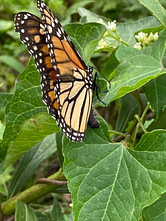
Walk-and-Talk Consultation
Half-day; On-site
The most grounded way to begin. We walk your land together, reading the patterns that are already speaking — water movement, sun angles, soil texture, existing vegetation communities, and the human flows that shape how the land is actually used.
What's included:
On-site observation and site reading with you
• Conversation about goals, constraints, and long-term vision
• Real-time identification of patterns, opportunities, and leverage points
• A recorded debrief and written follow-up notes with key observations and next-step directions
Ideal For:
Ideal for those in the early stages of visioning, or who want an experienced second set of eyes before committing to a design process.

Conceptual Design
2-4 Weeks; Site visit + studio
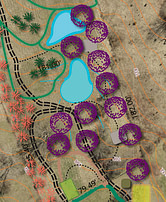
A strategic design framework for your land and livelihood system — clear enough to orient decisions, flexible enough to meet what the land reveals over time. Conceptual design doesn't fix every detail; it establishes the underlying logic that makes all subsequent decisions coherent.
What's included:
Extended site assessment and base map development
• Sector and zone analysis calibrated to your context
• Conceptual design document: spatial strategy, element relationships, succession pathways
• Integration of livelihood and organizational needs into the design framework
• Presentation session and revision round
Ideal For:
The right starting point for most projects — gives clarity and direction without over-designing before you've worked with the land for a season.

Detailed Design
6-12 Weeks; Immersive engagement
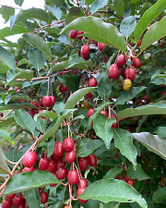
A comprehensive systems design: implementation-ready, ecologically grounded, and built to evolve. For those who are ready to move from vision to action with full confidence in the design logic behind every decision — and a clear implementation sequence.
What's Included:
• Comprehensive site analysis across multiple visits and seasons where possible
• Detailed scaled design maps for key systems (water, access, structures, planting)
• Species and variety selection grounded in regional knowledge and site conditions
• Implementation phasing plan with resource and labour sequencing
• Soil and fertility strategy
• Livelihoods and organizational integration where relevant
• Design handbook for ongoing reference and adaptation
Ideal For:
For established homesteads, farms, community land projects, and organizations ready for a serious long-term design commitment.

THE PROCESS
Design as relationship, not transaction
Listen
Before any design work begins, we spend real time on the land and in conversation — learning what's already here, what the place has to teach, and what you're genuinely trying to create.
Pattern
Reading patterns at every scale — from watershed dynamics to microclimates to the daily rhythms of people on the land. Pattern literacy is the foundation everything else is built on.
Integrate
Bringing ecological systems and human systems together in one coherent design — so that water strategy and community governance, food production and financial viability, grow from the same root.
Evolve
Good design creates capacity, not dependency. Every engagement is oriented toward building your own ability to read, adapt, and evolve your system as it matures and as conditions change.
EXPERIENCE
Where integrated knowledge meets living practice.
Design work is only as good as the understanding behind it. The experience brought to each project spans disciplines that are rarely held together — and that integration is the difference between design that looks right on paper and design that works in the ground, through seasons, across generations.
Pillar 1 - Integrated Design
Two decades designing systems that hold land, livelihoods, and community together — not as separate domains bolted together, but as genuinely integrated wholes.
Pillar 2 - Systems Thinking
Training in organizational development and systems analysis grounds the ecological work in rigorous thinking about feedback loops, leverage points, and emergent properties.
Pillar 3 - Nature Connection
Deep nature connection practice — not as a retreat from the world, but as the foundation for accurate perception. The ability to truly see what a place is doing is a learnable, practice-able skill.
Pillar 4 - Generational Knowledge
Rooted knowledge of regional ecology, land history, and seasonal patterns — the kind of contextual understanding that takes generations to accumulate and that no manual can replace.
ROOTED IN REGION
Knowing a place across time changes everything
Design advice that comes from a deep familiarity with this region — its microclimatic patterns, its soils and watersheds, its native plant communities, and the farming and land-use history that has shaped the landscape — is categorically different from advice drawn from general principles alone.
Generational knowledge isn't about nostalgia. It's about having watched how this specific landscape behaves in drought years, in flood years, in late frosts and early springs — and bringing that earned understanding to every design conversation.
Four Knowledge Areas
1. Regional Plant Literacy:
Deep familiarity with native and naturalized plant communities, their successional relationships, and their practical roles in food, medicine, building, and habitat systems. Plus, the knowledge of what can be brought in to complement these plants.
2. Watershed & Water Pattern Knowledge:
Understanding how water moves through this landscape — from ridge to valley floor, season by season — is foundational to every design decision about water harvesting, storage, and distribution.
3. Microclimate Observation:
Years of observing how cold air drains, where frost pockets form, how slopes orient to sun, and which corridors carry wind — the invisible geography that determines what's possible where.
4. Land Use History:
Understanding what has happened to this land over generations — what's been farmed, grazed, harvested, disturbed — is essential for reading what the land is and what it can become.
Book a walk-and-talk
Half-day on-site consultation -- the best place to start


Inquire about a conceptual design
Strategic design framework for your land and livelihood system
Inquire about a detailed design
Implementation-ready, full-system design engagement
Not sure where to start?
Let's talk. Send a message and we'll find the right solutions.